A Scene-by-Scene Rehearsal or a Full Run? Choose by the Job
Choose scene-by-scene rehearsal or a full run by the job at hand, so actors can solve local problems without losing the shape of the whole play.
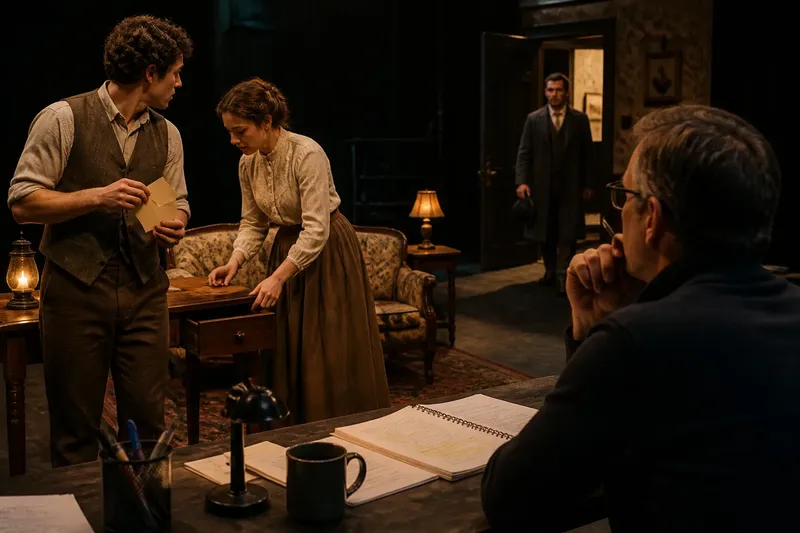
The cast reaches the end of a scene, but the entrance that follows is late and the next exchange has gone flat. Should you stop and work on that moment, or keep going to see what happens across the act? Choosing between scene-by-scene rehearsal and a full run depends on the job you need the room to do.
These formats are not rival methods. Focused rehearsal gives a small piece close attention; a continuous run lets the production behave as a whole. Use the following decisions to choose deliberately, and tell the cast what kind of work the next session is for.
1. Repair a specific moment
Choose scene-by-scene rehearsal when you can name the problem and locate it: a cue is unclear, a turn in the argument feels abrupt, or an actor cannot make a transition land. Stop before the trouble spot, identify what the audience needs to understand, then try a practical adjustment.
Keep the work narrow. If a line is being buried, check the actor’s direction, the distance between partners, and whether the response begins too soon. Change one thing at a time where possible, then play the exchange again with enough of the lead-in to judge whether the adjustment fits.
A useful focused session does not mean polishing every sentence. If the scene’s basic intention is still unclear, ask the actors what each character is trying to get from the other. A playable objective gives the next run a reason to change, rather than asking for a vague improvement.
2. Check the play’s flow
Choose a full run when the question is larger than any one scene: does the story keep moving, do changes of place make sense, or does the emotional pressure build and release in a convincing way? A continuous pass reveals how one section hands its energy to the next. It also shows whether a moment that seems strong on its own slows the evening in context.
Agree on the run’s purpose before starting. You might ask the cast to maintain pace, watch the transitions, or keep the sequence of events clear. Avoid stopping for every small stumble; interruptions erase the very continuity the run is meant to reveal.
Keep brief notes instead. Mark a page or moment, write down what you observed, and return to the work after the run. A full pass is a way to see patterns, not a final judgment of the actors or the production.
3. Rehearse the joins
Some trouble sits between scenes rather than inside them. An actor may need a quick exit and return, furniture may have to shift, or a change in time may need a clear signal. In that case, rehearse the transition as a small unit: the final action before the change, the practical movement, and the first action after it.
Do not assume a successful scene automatically produces a clean handoff. Ask who moves what, where the actors wait, and what cue starts the next section. For a transition involving scenery, props, or costume, include the people responsible for those elements so the plan is workable for everyone who must carry it out.
If several joins remain uncertain, a full run can show whether they interrupt the story repeatedly. Then return to scene-by-scene work on the transitions that need clearer timing or intention.
4. Protect a new choice
When an actor or director has just changed a choice, a focused rehearsal helps the room understand what the change does. Test the new behavior in the relevant exchange and watch its effect on the partner. If the adjustment depends on a quiet pause, a shifted focus, or a different entrance, give it space before asking whether it survives the whole play.
Once the choice is steady enough to repeat, include it in a full run. This checks whether it connects to what comes before and after, and whether the cast can maintain it without a stop. Treat the run as a check on continuity, not as a demand to restore the old version if the new one feels unfamiliar.
Say you are staging an invented scene in which one character conceals a letter before a visitor enters. In focused work, the actors could clarify when the concealment happens and what the visitor notices. Once the timing is clear, a continuous run could show whether the action still reads after the preceding scene and before the visitor’s first line.
5. Match the format to the room
Choose the format the available people and space can support. If a scene depends on a particular chair, doorway, or sound cue, focused work may be more useful when those elements are present. If the main question concerns pace across the evening, arrange the cast, props, and transitions needed for a continuous pass rather than pretending an incomplete setup answers the same question.
Time and attention matter, too. A tired cast may benefit more from one clearly defined section than from a run with no energy left for useful observation. Conversely, if repeated stops have made the play feel like disconnected fragments, a run can restore the actors’ sense of the whole. A run is like reading a whole recipe after adjusting one ingredient: both views matter, but they answer different questions.
6. When should you switch?
How do you know a scene needs focused work?
Switch to scene-by-scene rehearsal when you can identify a specific moment that is confusing, inconsistent, or difficult to repeat. Bring the smallest useful section into the room, along with a clear question for the actors.
When is a full run more useful?
Use a full run when you need to judge pace, cumulative storytelling, or the handoffs between sections. It is especially useful after focused changes are stable enough to carry forward without constant explanation.
Should you stop a run to fix a mistake?
Stop if the issue prevents the cast from continuing or makes the next work unsafe or impossible. For ordinary slips, note the location and keep going so you can judge the larger flow, then decide whether the moment needs a targeted rehearsal.
Can you combine both formats in one rehearsal?
Yes, if each part has a distinct purpose. For example, spend the first portion on a difficult transition, then run the surrounding sequence to see whether the adjustment connects cleanly.
7. Close with a usable decision
At the end of a session, name what the room learned and what remains open. For focused work, note the choice the actors should carry forward. After a full run, identify the few moments that deserve closer attention instead of handing the cast a long list of impressions.
Before the next rehearsal, write one sentence that defines its job: “We are testing the act’s pace,” or “We are clarifying the entrance after the argument.” That small decision makes it easier to choose a scene-by-scene rehearsal or a full run, and helps everyone spend their attention on the question the production actually needs answered.